conférence · Vendredi 19 octobre 2018
English, French and European Handwriting in the Age of Baskerville
Marc Smith
The eighteenth century witnessed
new forms of handwriting which
profoundly affected the evolution
of type. English writing masters in
particular, long under the influence
of French and Dutch models,
blended these into an original cursive
style, ‘English round hand’,
in which a pointed nib, subjected
to delicate pressure, produced
typically contrasted thick and thin
strokes. English copybooks show
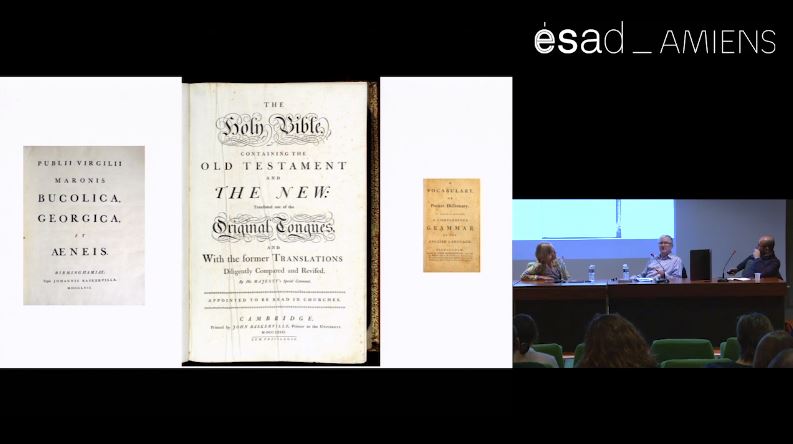
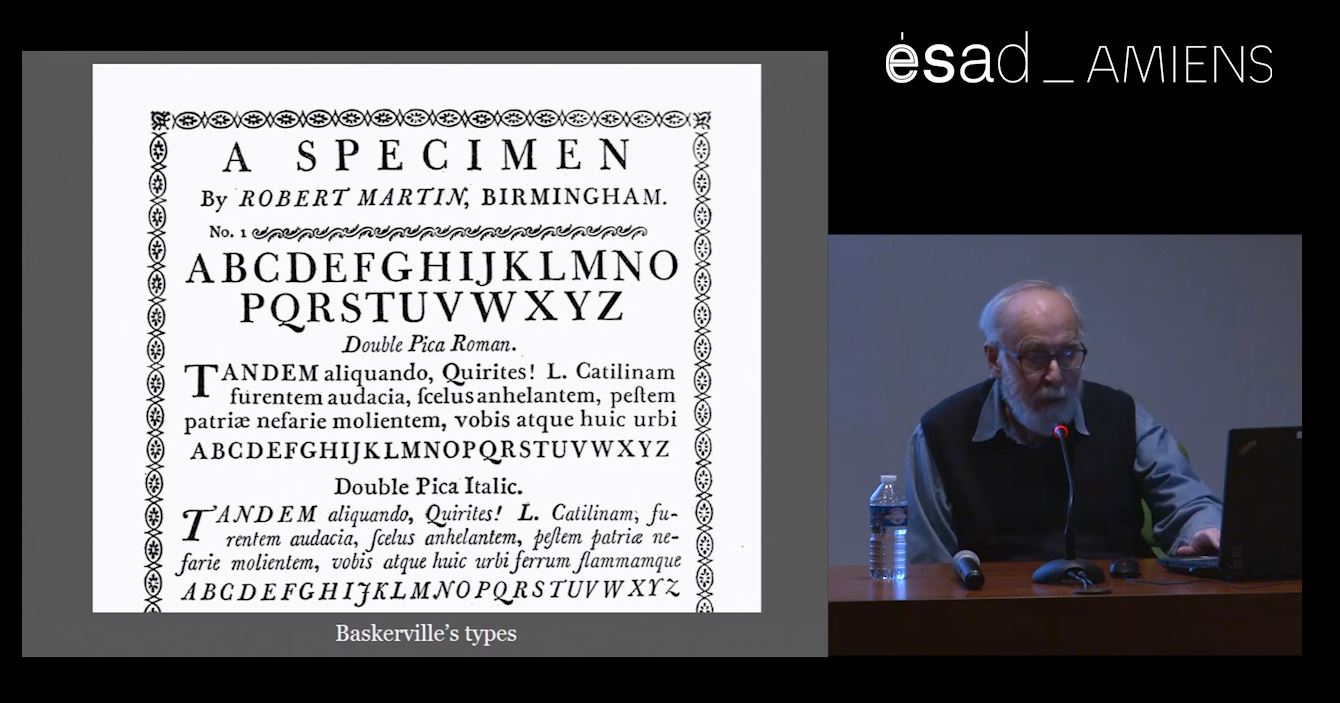
some roman alphabets that clearly
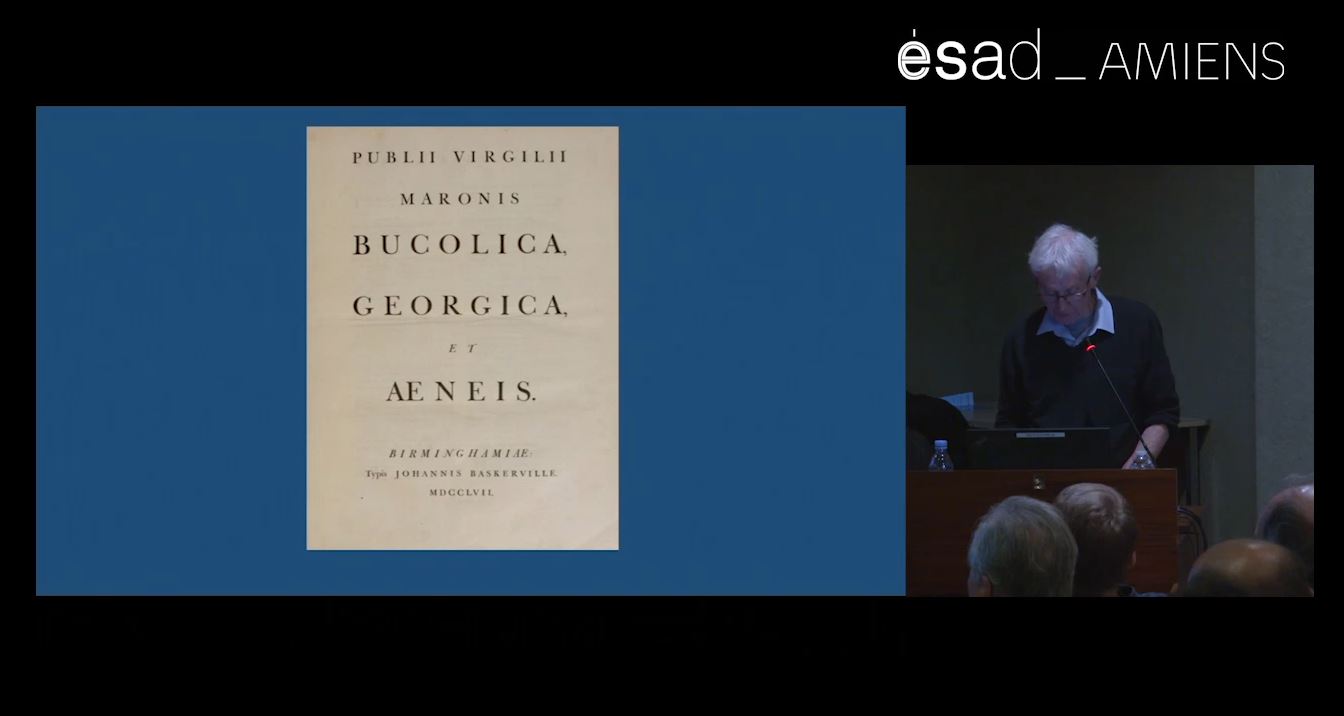
inspired the types of Baskerville,
himself a writing master. When
Beaumarchais in France first used
Baskerville’s types, English round
hand also began to spread across
Europe as the Anglaise, Inglese, or Englische Schrift. Despite opposition
from French writing masters,
in defence of national character in
handwriting, English round hand
became the new European standard
of the nineteenth century,
parallel to the spread of ‘modern’
type and its similarly contrasted
letterforms.
- Manifestation
- Baskerville in France (2018)
- Disciplines
- Typographie