journée d'étude · 24 octobre 2019
Should every foundry have its own sans serif?
Dan Reynolds
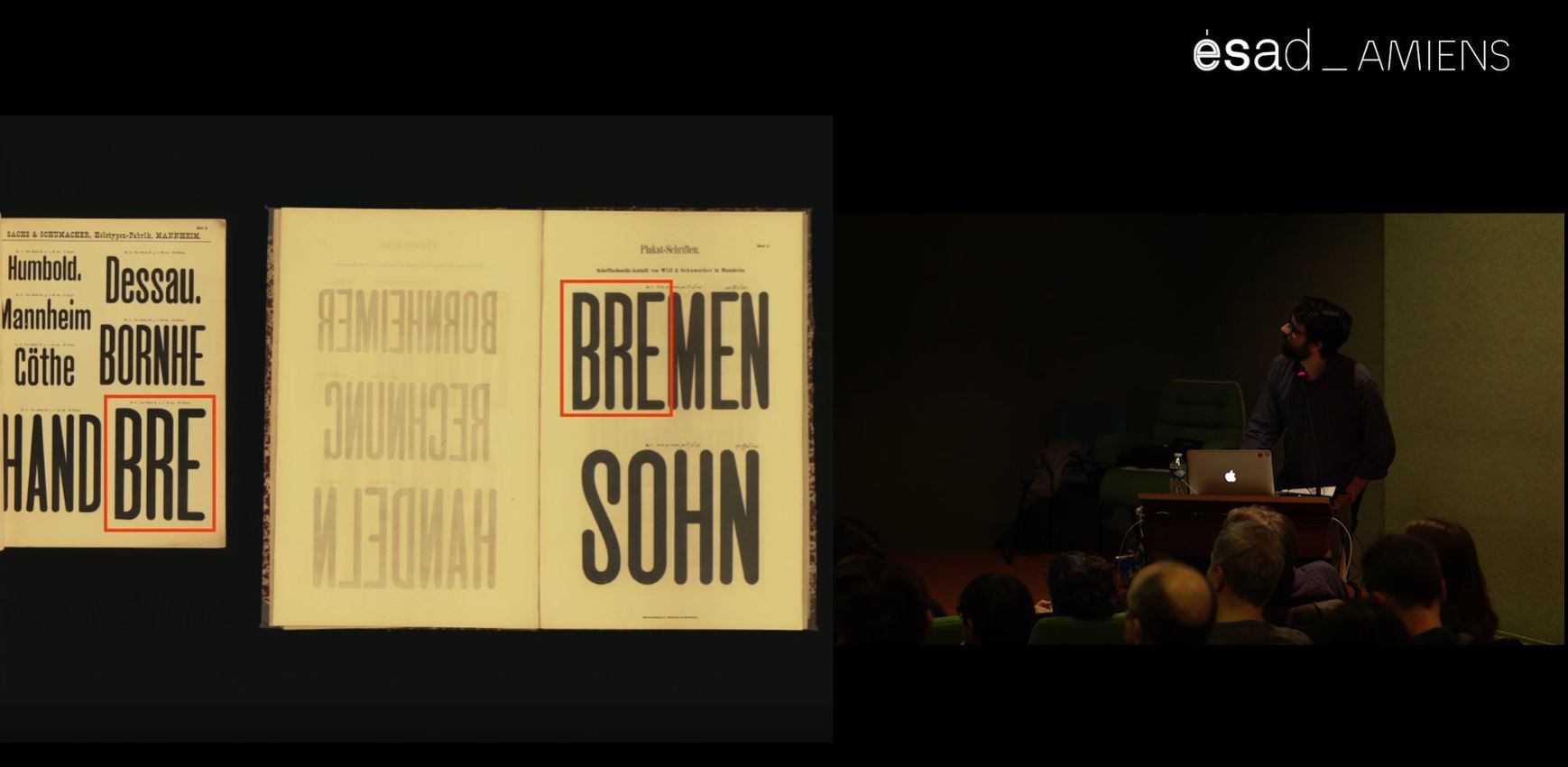
A history of German sans serifs should contain more than just names and dates of the first examples with lowercase letters, or designs offering a range of sizes, or even which foundries sold families of unified designs spanning across multiple weights and widths. Instead, a narrative of sans serif development might help us better understand changes within the type-founding business between 1850 and 1900. Looking at the sans serifs introduced during that interval, we can see how attitudes about originality and exclusivity came about. Don’t worry, though! This presentation won’t leave out those evolutionary milestones mentioned above.
Dan Reynolds works at LucasFonts in Berlin. He’s also a design historian focusing on foundries from Imperial Germany. In January, Dan passed his doctoral examinations in Braunschweig, where he taught for several years. Long ago, he worked for Linotype and freelanced for clients like FontFont, Indian Typefoundry, or Typejockeys.
Dan Reynolds works at LucasFonts in Berlin. He’s also a design historian focusing on foundries from Imperial Germany. In January, Dan passed his doctoral examinations in Braunschweig, where he taught for several years. Long ago, he worked for Linotype and freelanced for clients like FontFont, Indian Typefoundry, or Typejockeys.
- Manifestation
- Sans Everything #2 (2019)
- Durée
- 49'59
- Langue
- anglais
- Coordination
- Sébastien Morlighem
- Disciplines
- Typographie